Indonesia enforces halal certification requirements for cosmetics
Ingredients, processing aids, cleaning agents, packaging and applicators must have appropriate halal certification or supporting documentation.
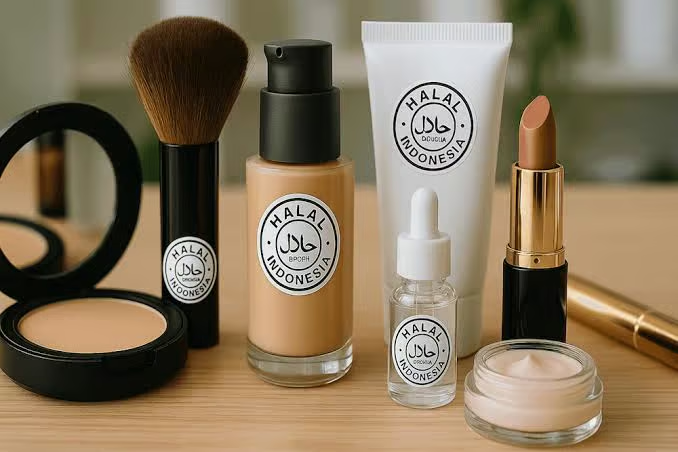
INDONESIA – Indonesia has introduced mandatory halal compliance requirements for cosmetics, effective October 21, 2026, requiring products sold in the country to carry halal certification or be clearly labelled non-halal.
The Halal Product Assurance Organizing Agency (BPJPH) has ruled out postponing implementation while drafting specific provisions for micro and small enterprises, imported products, raw materials and consumer goods.
According to the State of the Global Islamic Economy Report 2023/24, Muslim consumer spending on cosmetics reached USD 84 billion in 2022, a 14.3% increase from USD 74 billion in 2021.
Spending is projected to reach USD 129 billion by 2027, representing a compound annual growth rate of 8.9%. Indonesia and India were identified as the two largest markets for Muslim cosmetics spending.
BPJPH head Haikal Hasan said the requirement, including verification of imported products’ halal status, aims to protect consumers and provide regulatory certainty rather than restrict trade. He also denied plans for enforcement sweeps targeting businesses.
The draft Halal Product Assurance System (SJPH) guidelines identify 11 critical control points throughout production and outline requirements covering accountability, ingredients, manufacturing processes, labelling and ongoing supervision. Companies must establish a written halal policy and appoint a Halal Supervisor.
Pig-derived ingredients are prohibited, while certain animal-derived ingredients must comply with Islamic slaughter requirements.
Manufacturing facilities and equipment must also maintain separation between halal and non-halal processes, supported by documented procedures and washing records.
Halal labels can only be displayed after certification from BPJPH. Businesses must conduct annual internal audits, undertake management reviews and submit relevant compliance information.
Under Article 26 of Law No. 33 of 2014, products containing prohibited ingredients may carry non-halal labels.
However, businesses cannot avoid certification simply by applying a non-halal label to products that contain no prohibited ingredients.
Indonesia’s cosmetics industry comprised 1,655 businesses as of July 2026, with more than 87% classified as small and medium-sized enterprises (SMEs). More than 370,000 cosmetic products had been registered by August 2026.
Cosmetics exports increased 13.7% to USD 473.8 million in 2025, up from US$416.8 million in 2024.
The government is also supporting smaller manufacturers in improving competitiveness and accessing international markets.
BPJPH has warned businesses and consumers about fraudulent demands for payments allegedly linked to certification fines.
Earlier in 2026, Indonesia’s Food and Drug Monitoring Agency (BPOM) seized more than two million illegal cosmetics across 956 product lines, valued at approximately 27.6 billion rupiah (USD 1.7 million).
Alongside regulatory developments, Indonesia’s beauty sector is embracing personalised skincare.
Rohto Laboratories Indonesia partnered with AI beauty technology provider Revieve to launch an AI-powered skin analyser, while ParagonCorp subsidiary Wardah introduced Wardah Skinverse 2026: Skin Longevity Clinic, promoting a holistic approach to skin longevity.
Sign up to receive our email newsletters with the latest news updates and insights from Africa and the World HERE.