Dr. Bronner’s, Atlantic Packaging partner on new packaging to eliminate 14,600 pounds of plastic
Two-packs of Dr. Bronner’s Peppermint Pure-Castile Magic Soap will feature the Fishbone Dog Bone packaging.
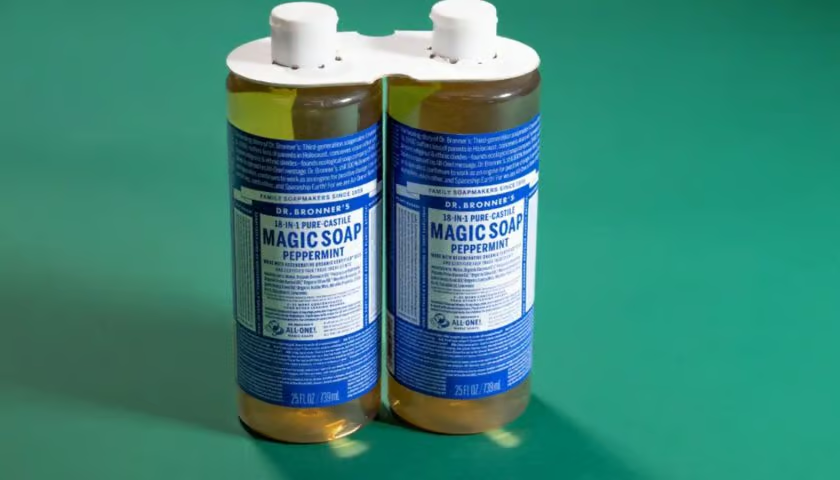
USA – Dr. Bronner’s has adopted Atlantic Packaging’s Fishbone Dog Bone, a fibre-based and kerbside-recyclable replacement for plastic multipack carriers, for its two-pack soap products.
The switch is expected to eliminate approximately 14,600 pounds of plastic.
The Fishbone Dog Bone is designed to reduce reliance on single-use plastic while still providing the strength and practicality needed to transport products safely.
It is made using paperboard supplied by Billerud, which the company says is sourced from responsibly managed forests.
For Dr. Bronner’s two-pack, Atlantic Packaging created a custom flat-top dog-bone design using only a minimal amount of fibre.
The carrier holds the two bottles together and makes it easy for distributors and shoppers to lift and carry the package. Its fibre strength is intended to balance efficient material use with reliable packaging performance.
Meghan Miller and Chad Fields of Atlantic Packaging explained that the design operates much like a conventional plastic dog-bone carrier.
When a shopper lifts the bottles from a shelf, the carrier engages openings beneath the bottle caps to create a secure grip.
The design was tested and refined at Atlantic Packaging’s Packaging Solution Center and in real-world conditions.
The companies said this testing accounted for the different ways the package could be handled throughout its journey from production to the consumer.
Miller and Fields said, “Our goal was to remove plastic from the carrier while still delivering the strength and functionality that Dr. Bronner’s and its customers require,”
The Fishbone Dog Bone is intended to support Dr. Bronner’s sustainability commitments, which are reflected in its six Cosmic Principles.
These principles include pursuing near-zero waste and using 100% post-consumer recycled packaging.
Dr. Bronner’s is also part of the Purpose Pledge, an initiative focused on verified climate action, achieving TRUE certification in pursuit of zero waste, and other sustainability goals.
According to Miller and Field, the project was designed to go beyond simply replacing one material with another.
Instead, the companies considered the packaging system as a whole, including the amount of material used, its performance, and how to lessen its environmental impact without creating difficulties elsewhere in operations or the supply chain.
They acknowledged that a full life-cycle analysis comparing the fibre-based carrier with the previous plastic format has not yet been completed.
However, they said the change represents a meaningful reduction in single-use plastic destined for consumers.
Sign up to receive our email newsletters with the latest news updates and insights from Africa and the World HERE.