BASF, ParagonCorp partner on cosmetic innovation
The non-binding, non-exclusive agreement creates a framework for the two companies to collaborate on research and development.
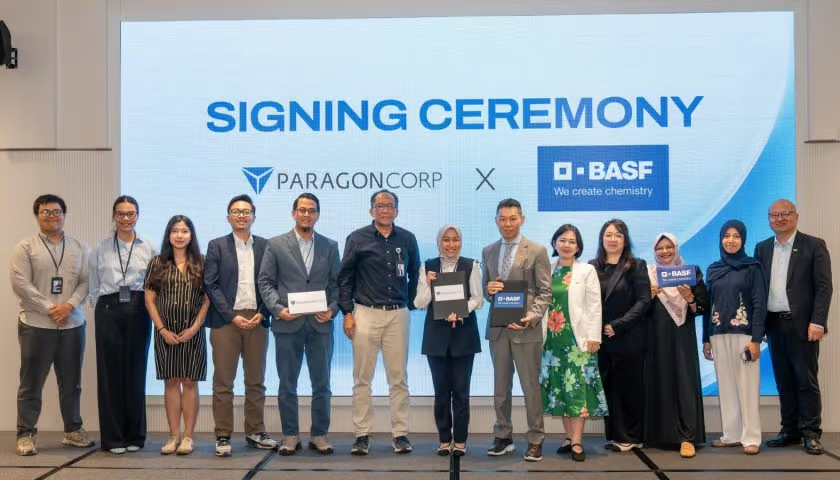
INDONESIA – BASF and ParagonCorp, Indonesia’s largest personal care company, have signed a memorandum of understanding (MoU) to explore opportunities for collaboration on science-backed cosmetic innovation.
ParagonCorp is the first beauty company in Indonesia to sign an MoU with BASF’s Personal Care business.
The agreement was signed at ParagonCorp’s office in Jakarta by Dr. Sari Chairunnisa, Deputy CEO and Chief R&D Officer at ParagonCorp, and Dr. Chang Wang, Vice President of Business Management for Personal Care, Asia Pacific, at BASF.
The partnership combines BASF’s expertise in ingredient and formulation science and its global research capabilities with ParagonCorp’s deep understanding of local consumers and its product development experience.
Together, the companies will explore differentiated cosmetic concepts based on scientific advances and evolving consumer and market needs.
BASF and ParagonCorp will assess potential areas of cooperation that build on their respective strengths.
Their work will focus on developing science-backed cosmetics tailored to Indonesian consumers while responding to emerging developments in cosmetic science and technology.
The MoU is also intended to encourage knowledge exchange, broaden both companies’ perspectives, and identify expertise that can support the creation of relevant cosmetic innovations.
The partnership comes at a time of growing momentum in Indonesia’s cosmetics industry, with increased attention from both local companies and the government.
In September, Indonesia’s Ministry of Industry reported that the country’s cosmetic exports rose 13.7% to USD 473.8 million in 2025, up from USD 416.8 million in 2024.
The ministry has also strengthened support for small and medium-sized enterprises (SMEs) in the personal care sector.
The goal is to improve their competitiveness and expand their access to international markets, particularly as SMEs make up the majority of Indonesia’s domestic cosmetics industry.
Beyond exports, Indonesia’s domestic beauty offerings are also expanding. Earlier this year, ParagonCorp’s subsidiary Wardah launched Wardah Skinverse 2026: Skin Longevity Clinic, which was described as Indonesia’s first complete skin longevity clinic.
The clinic brings together lifestyle, wellness, expert insights, and skincare technology to help consumers understand how daily habits affect long-term skin health.
It focuses on five pillars, move, eat, rest, stress, and protect, and follows a measure, understand, and act approach to deliver personalized skin longevity recommendations.
As the cosmetics sector grows, the Indonesian government is tightening its regulatory framework.
The country is introducing mandatory halal requirements, under which all cosmetics must either carry halal certification or be clearly labelled as non-halal.
Last month, the government extended the compliance deadline by two years to October 2028.
The extension is intended to give the halal ecosystem more time to prepare and provide businesses with greater certainty during the transition.
Sign up to receive our email newsletters with the latest news updates and insights from Africa and the World HERE.